
Intravenous (IV) therapy has become an increasingly popular wellness treatment in recent years. Many people seek IV hydration or vitamin infusions to support energy, hydration, immune function, and recovery.
However, for those considering the treatment for the first time, one question often comes up:
What actually happens during an IV therapy session?
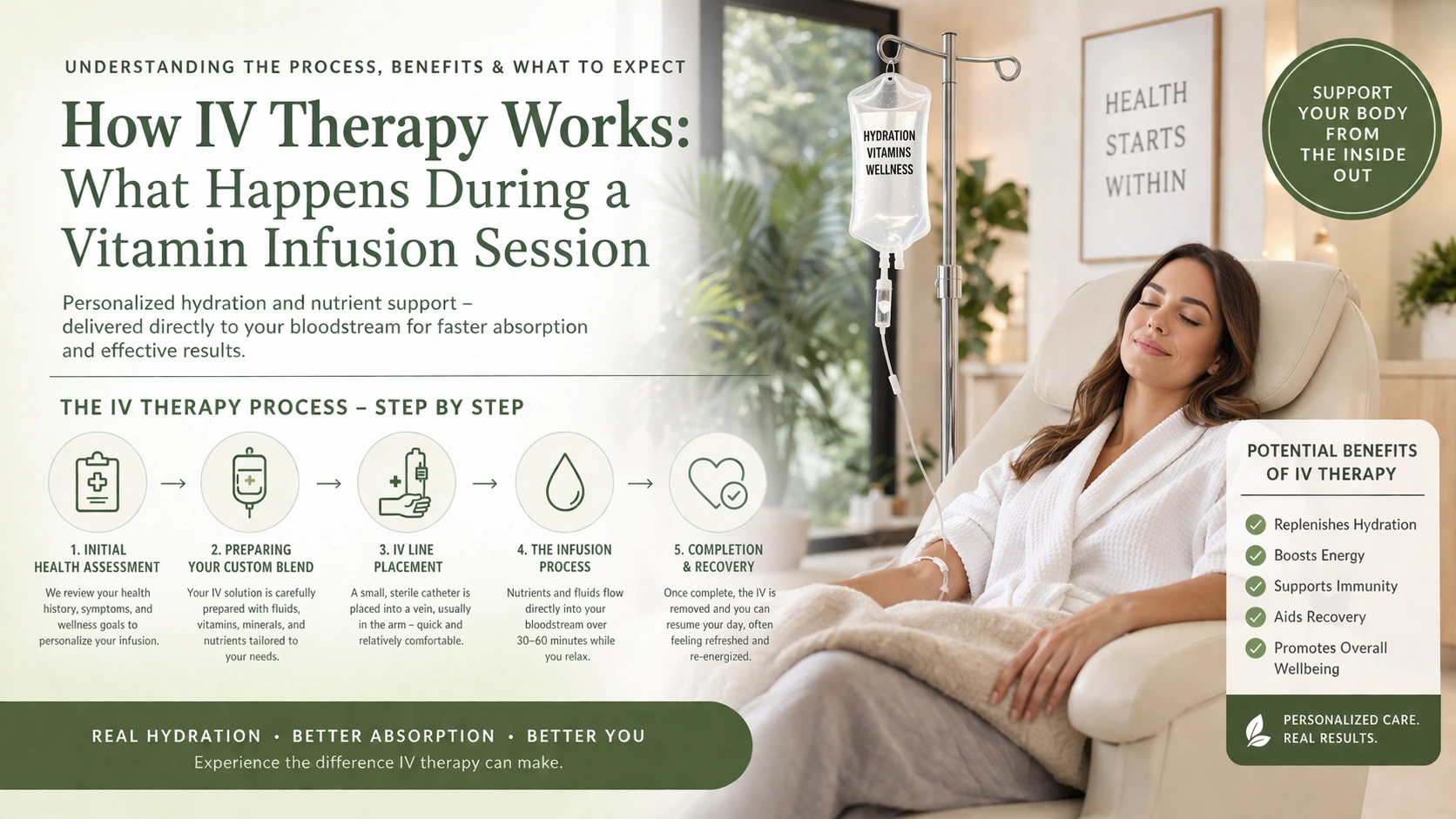
If you’ve never had IV therapy before, it’s normal to wonder what actually happens during the process. From how nutrients enter the bloodstream to what the infusion session feels like, understanding the basics can make the experience much less intimidating.
In the sections below, we’ll walk through how IV vitamin therapy works, what typically happens during a session, and why many people choose this approach to support hydration, energy, and overall wellbeing.
Why Nutrient Delivery Through the Bloodstream Works Differently
To understand why IV therapy works the way it does, it helps to look at how the body absorbs nutrients.
When vitamins are taken orally, they must pass through several steps:
- Digestion in the stomach
- Absorption through the intestinal lining
- Processing by the liver
- Distribution through the bloodstream
This process is known as first-pass metabolism, and it can reduce the amount of nutrients that ultimately reach the bloodstream.
In contrast, IV therapy bypasses the digestive system entirely. Nutrients are delivered directly into circulation, where they become immediately available to tissues.
Nutrient Absorption Comparison
| Method | Absorption Pathway | Time to Circulate | Efficiency |
|---|---|---|---|
| Oral Supplements | Digestive system → liver → bloodstream | Slower | Variable |
| IV Therapy | Direct bloodstream delivery | Immediate | Higher bioavailability |
Because of this difference, IV therapy can provide rapid hydration and nutrient delivery.
What Happens During an IV Therapy Session?
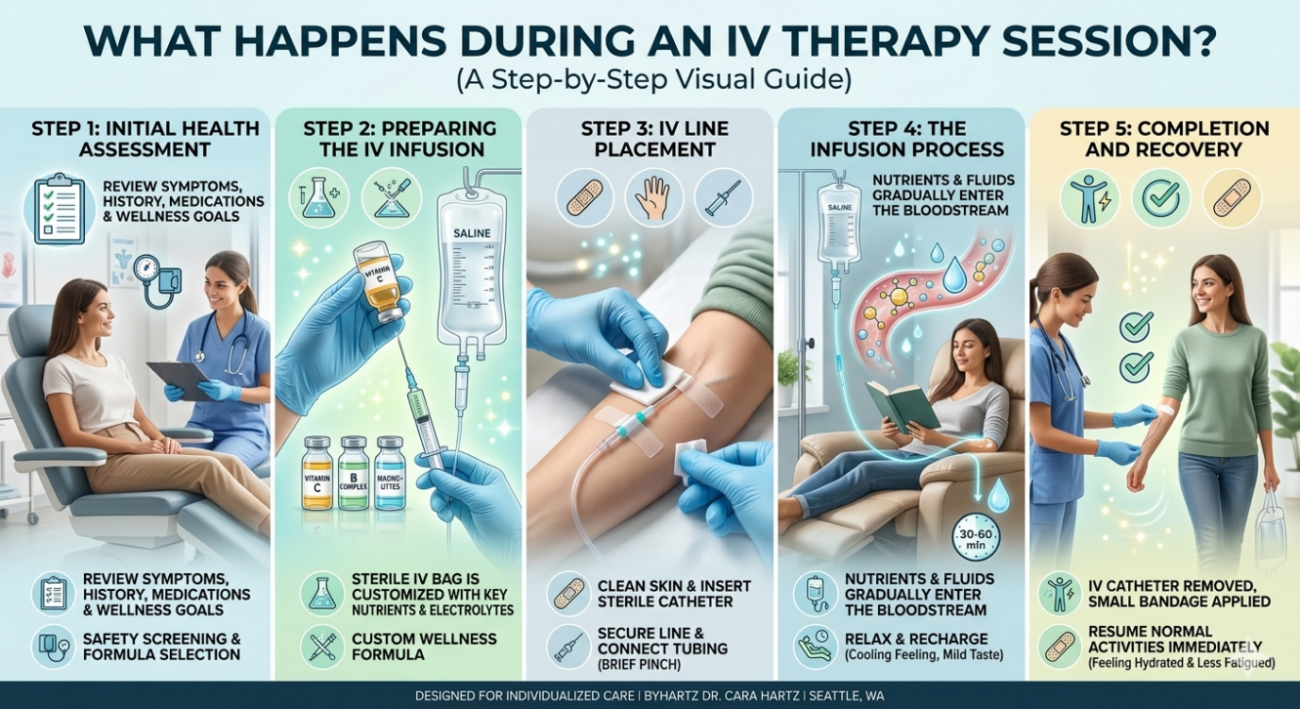
Although the process may sound complicated, most IV therapy sessions follow a straightforward and structured process.
Understanding each step can help patients feel more relaxed before their first appointment.
Step 1: Initial Health Assessment
Before beginning IV therapy, a healthcare professional typically performs a brief consultation.
This may include reviewing:
- current symptoms
- medical history
- medications or supplements
- hydration status
- overall wellness goals
This assessment helps determine which nutrients or hydration formula may be most appropriate.
Safety screening is an important part of responsible IV therapy.
PRO TIP
Always choose IV therapy administered by trained medical professionals who perform a health evaluation before treatment.
Step 2: Preparing the IV Infusion
Once a treatment plan is selected, the IV solution is prepared.
Common ingredients in wellness IV infusions may include:
- saline or electrolyte fluids
- vitamin C
- B vitamins
- magnesium
- amino acids
- antioxidants
These nutrients are mixed in sterile IV bags designed for safe intravenous delivery.
Step 3: IV Line Placement
A small catheter is placed into a vein, usually in the arm.
The process is similar to having blood drawn and typically takes only a few minutes.
The healthcare professional:
- Cleans the skin with antiseptic
- Inserts a small sterile catheter into the vein
- Secures the catheter with medical tape
- Connects the IV tubing to the nutrient solution
Most people describe the sensation as a brief pinch.
Step 4: The Infusion Process
Once the IV line is placed, the infusion begins.
Nutrients and fluids slowly flow through the IV line into the bloodstream.
Most IV sessions last between 30 and 60 minutes, depending on the formula used and the rate of infusion.
During this time, patients often relax, read, or listen to music while the infusion takes place.
Because nutrients are delivered gradually, the body can absorb them safely.
What Patients Often Notice During Infusion
| Sensation | Explanation |
|---|---|
| Cooling feeling in the arm | Fluid entering the bloodstream |
| Mild taste of vitamins | Some nutrients circulate quickly |
| Relaxation | Hydration and magnesium effects |
These sensations are typically mild and temporary.
Step 5: Completion and Recovery
Once the infusion is complete, the IV catheter is removed and a small bandage is applied.
Most people can resume normal activities immediately afterward.
Some individuals report feeling:
- more hydrated
- mentally clearer
- less fatigued
However, responses vary depending on hydration levels, nutrient status, and overall health.
Why People Seek IV Vitamin Therapy
People choose IV therapy for many different reasons.
Common wellness goals include:
- hydration support
- recovery from fatigue
- immune system support
- recovery from illness or travel
- support for athletic recovery
For individuals experiencing digestive issues that affect nutrient absorption, IV delivery may also provide an alternative route for certain nutrients.
When IV Therapy May Be Helpful
While IV therapy is not necessary for everyone, some situations may increase interest in this approach.
Possible scenarios include:
- dehydration due to illness
- intense physical activity
- recovery after travel or illness
- nutrient depletion from stress or poor diet
- gastrointestinal conditions affecting absorption
A qualified healthcare provider can help determine whether IV therapy is appropriate for a particular situation.
Important Safety Considerations
Although IV therapy is generally safe when performed correctly, it is still a medical procedure and should be administered by trained professionals.
Possible risks include:
- infection at the IV site
- vein irritation
- electrolyte imbalance if formulas are inappropriate
- allergic reactions in rare cases
This is why medical supervision is important.
A Note of Caution
Not all IV therapy services follow the same medical standards. It is important to receive treatment from licensed healthcare providers who understand patient safety, sterile procedures, and appropriate dosing.
Why Personalized IV Therapy Matters
Not every person needs the same combination of nutrients.
Factors such as:
- hydration levels
- diet and lifestyle
- stress exposure
- underlying health conditions
can influence what type of IV infusion may be beneficial.
At Byhartz, Dr. Cara Hartz focuses on individualized wellness care. Patients seeking IV therapy in Seattle, WA often appreciate the personalized approach to hydration and nutrient support.
Care is designed to align with each patient’s health goals and overall medical history.
PRO TIP
If you are considering IV therapy, ask your provider about:
- ingredient transparency
- dosing protocols
- medical supervision during infusion
These factors help ensure safe and effective treatment.
Important Points to Remember About IV Therapy
• IV therapy delivers fluids and nutrients directly into the bloodstream.
• This method bypasses digestive absorption.
• Sessions typically last between 30 and 60 minutes.
• Medical screening is important before treatment.
• Individual responses may vary depending on hydration and nutrient status.
Frequently Asked Questions
How long does an IV therapy session take?
Most sessions last between 30 and 60 minutes depending on the infusion formula.
Does IV therapy hurt?
Patients typically feel a small pinch when the IV catheter is inserted, similar to a blood draw.
How often can someone receive IV therapy?
The frequency depends on individual health goals and medical guidance.
Are there side effects?
Side effects are uncommon when IV therapy is administered properly, but mild discomfort or bruising at the IV site can occasionally occur.
Who should avoid IV therapy?
Individuals with certain medical conditions or allergies should consult a healthcare professional before receiving IV therapy.
Conclusion
IV therapy is a medical technique that delivers fluids and nutrients directly into the bloodstream, allowing for rapid hydration and nutrient delivery.
While originally developed for hospital care, the approach is now used in many wellness settings to support hydration, recovery, and overall wellbeing.
Understanding what happens during an IV therapy session from consultation to infusion can help patients feel more confident when considering treatment.
As with any medical procedure, choosing a qualified healthcare provider and receiving personalized care are important steps toward safe and effective results.