

Ozone therapy is one of those treatments that people often hear about but don’t fully understand. Some know it has something to do with oxygen. Others associate it with immune support or chronic conditions. But very few truly understand how it works inside the body, what happens during a session, and when it may actually be considered.
If you’re exploring integrative medicine options, ozone therapy may come up as part of a broader, root-cause approach to healing. But it’s not a one-size-fits-all solution, and it’s not something to try blindly.
This guide breaks it down clearly, what ozone therapy is, how it works, what the process looks like in a clinic, and what patients should realistically expect.
What Exactly is Ozone Therapy?
Ozone is a form of oxygen. While regular oxygen (O₂) has two atoms, ozone (O₃) contains three.
That extra oxygen atom makes ozone highly reactive, which is exactly why it is used in medical settings. When introduced in controlled amounts, ozone interacts with the body in ways that may support:
- oxygen utilization
- immune signaling
- circulation
- oxidative balance
In clinical settings, ozone is not inhaled. It is used in carefully controlled medical applications under supervision.
How Ozone Therapy Works in the Body
Ozone does not act like a typical medication. Instead, it works by triggering biological responses.
When ozone is introduced into the body, it interacts with lipids and proteins to create what are known as ozonides and peroxides. These act as signaling molecules.
These signals can influence:
- immune response
- inflammation pathways
- oxygen delivery to tissues
- cellular energy processes
Simple Breakdown
| Step | What Happens |
| Ozone enters the body | Delivered through a controlled medical method |
| Reactive interaction occurs | Ozone reacts with body fluids |
| Signaling molecules form | Triggers biological responses |
| Body responds | Immune, circulation, and metabolic changes occur |
PRO TIP
Ozone therapy is not about “adding oxygen” in a simple sense. It’s about stimulating how the body uses oxygen more effectively.
Types of Ozone Therapy Used in Clinics
Ozone therapy is not just one method. There are several ways it may be applied depending on the clinical goal.
Common Ozone Therapy Methods
| Method | How It’s Used | Purpose |
| Ozonated IV (Saline) | Ozone mixed with saline and infused | Systemic support |
| Major Autohemotherapy (MAH) | Blood is treated with ozone and returned | Immune modulation |
| Injection Therapy | Ozone injected into specific areas | Localized support |
| Rectal Insufflation | Ozone introduced via rectal route | Systemic effect without IV |
| Ear Insufflation | Ozone gently introduced into the ear canal | Local antimicrobial support, may support ear infections and sinus-related issues |
| Nasal Insufflation | Ozone administered through nasal passages using controlled method | Supports sinus health, antimicrobial action, may help with upper respiratory concerns |
| Topical Ozone | Applied to skin, wounds, or affected areas | Wound healing support and strong antimicrobial action for topical infections |
Each method serves a different purpose. The choice depends on:
- patient condition
- tolerance
- treatment goals
- practitioner judgment
What Happens During an Ozone Therapy Session?
Many patients feel uncertain before their first session simply because they don’t know what to expect.
Let’s walk through the actual process.
Step-by-Step Ozone Therapy Process
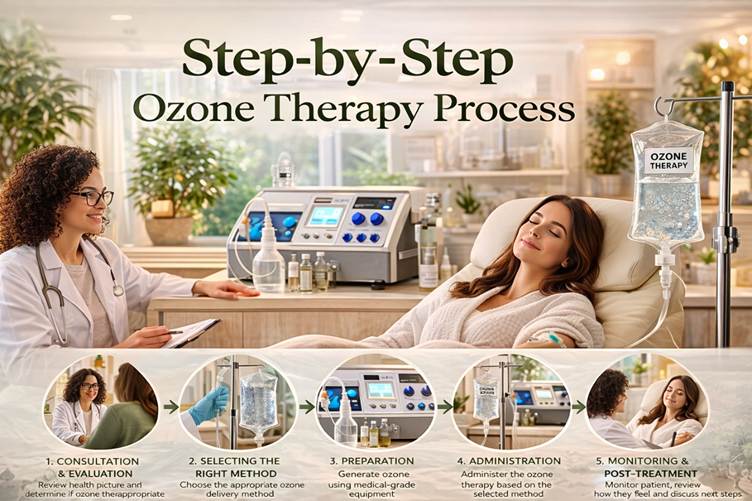
Step 1: Consultation and Evaluation
Before any treatment begins, your provider reviews:
- symptoms
- medical history
- current medications
- lifestyle factors
- treatment goals
This step is essential. Ozone therapy is never a blind protocol.
Step 2: Selecting the Right Method
Based on your needs, the provider chooses the appropriate delivery method.
Not everyone needs IV-based ozone. Some patients respond well to less invasive approaches.
Step 3: Preparation
The ozone is generated fresh using medical-grade equipment.
This ensures:
- correct concentration
- safety
- consistency
Step 4: Administration
Depending on the method:
- IV infusion may take 20-45 minutes
- blood-based therapy involves a draw and reinfusion
- injections are quick and localized
Step 5: Monitoring
Patients are observed during the session to ensure comfort and tolerance.
Step 6: Post-Treatment Phase
After the session, most patients can resume normal activities.
Some may feel:
- relaxed
- slightly tired
- more clear-headed
PRO TIP
Your first session is often about understanding how your body responds, not pushing aggressive treatment.
What Conditions is Ozone Therapy Used For?
In integrative medicine, ozone therapy is not used as a standalone cure. It is often part of a broader treatment plan.
Common Areas Where Ozone Therapy is Considered
| Category | Examples |
| Immune Support | Chronic infections, immune imbalance |
| Inflammation | Joint pain, chronic inflammation |
| Circulation | Poor oxygen delivery, fatigue |
| Recovery | Post-illness or stress recovery |
| Integrative Care | Combined with other therapies |
Important:
Ozone therapy is used supportively, not as a replacement for necessary medical care.
Why Ozone Therapy is Used in Integrative Medicine
Integrative medicine focuses on:
- root causes
- system-wide balance
- long-term health
Ozone therapy fits into this model because it:
- interacts with multiple systems
- does not target just one symptom
- supports physiological processes
Rather than suppressing symptoms, the goal is often to help the body respond more efficiently.
Benefits Patients Often Explore
While results vary, patients commonly explore ozone therapy for:
- improved energy
- better recovery
- immune system support
- reduced inflammatory burden
PRO TIP
The best results often happen when ozone therapy is combined with:
- nutrition
- lifestyle changes
- stress management
- other supportive therapies
Safety and Clinical Considerations
This is where many blogs fail, but it’s critical.
Ozone therapy is safe when used correctly, but incorrect use can be harmful.
Key Safety Points
- Must be performed by trained professionals
- Medical-grade equipment is required
- Proper dosing is essential
- Not all patients are candidates
Who Should Be Cautious?
| Situation | Why It Matters |
| Certain blood disorders | May affect tolerance |
| Pregnancy | Requires careful evaluation |
| Severe anemia | Oxygen-related therapies need caution |
| Active bleeding conditions | May not be appropriate |
KEEP IN MIND (Important for Patients)
Before starting ozone therapy, keep these points in mind:
• This is not a quick fix treatment
• Results vary from person to person
• It often works best as part of a broader plan
• Your body may need time to respond
• Communication with your provider is key
What Patients Often Feel After Treatment
Experiences vary, but common responses include:
- mild fatigue (temporary)
- increased clarity
- gradual improvement over sessions
- subtle changes rather than instant results
PRO TIP
If you feel slightly tired after treatment, it may simply be your body adjusting. Staying hydrated and resting can help.
Why Personalization Matters
Ozone therapy should never follow a generic protocol.
At Byhartz, Dr. Cara Hartz focuses on:
- understanding the full health picture
- identifying underlying contributors
- selecting appropriate therapies
- adjusting based on response
This is what separates integrative care from generic ozone therapy treatment in Seattle, WA.
Common Questions Patients Ask
Is ozone therapy painful?
Most methods are well tolerated. IV or blood-based therapies feel similar to standard medical procedures.
How many sessions are needed?
It depends on the individual. Some people notice changes quickly, while others need a series of treatments.
Is ozone therapy FDA-approved?
Ozone therapy is used in integrative and alternative medicine settings. Patients should always consult qualified providers for guidance.
Can it be combined with other treatments?
Yes. It is often used alongside other therapies.
Summary
Ozone therapy is not a trend or a quick wellness fix. It is a clinical tool used in integrative medicine to support how the body functions, particularly in areas like immune response, oxygen utilization, and inflammation balance.
Understanding how it works, and what it does not do, is essential before starting.
For patients who want a more thoughtful, personalized approach to their health, ozone therapy may be one part of a broader plan designed to support long-term wellbeing.