
If you have POTS, standing up can feel overwhelming.
Dizziness. A racing heart. Weakness. Brain fog.
Many patients ask the same question:
Why does simply standing make my symptoms so much worse?
The answer lies in how the autonomic nervous system regulates blood flow, heart rate, and circulation. This article explains what is happening, clearly and realistically, without medical jargon.
What is POTS and How Is It Related to Dysautonomia?
Postural Orthostatic Tachycardia Syndrome (POTS) is a form of dysautonomia.
Dysautonomia refers to conditions that affect the autonomic nervous system, which controls automatic body functions such as heart rate, blood pressure, and circulation.
In people with POTS, this system does not adjust properly when moving from sitting or lying down to standing.
Why Standing Triggers Symptoms in POTS
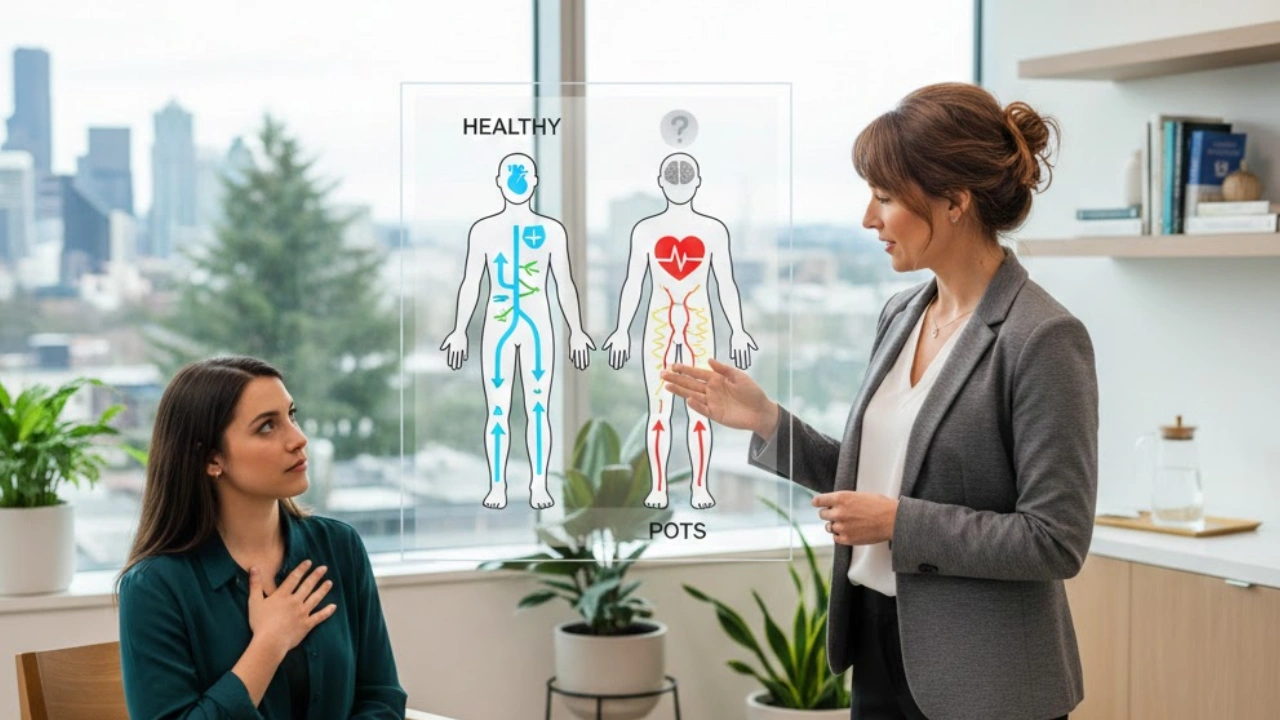
When a healthy person stands, gravity pulls blood toward the legs.
The autonomic nervous system quickly responds by tightening blood vessels and adjusting heart rate to maintain blood flow to the brain.
In POTS, this response is impaired.
Instead of tightening blood vessels efficiently:
- Blood pools in the lower body
- Less blood returns to the heart
- The brain receives reduced blood flow
To compensate, the heart rate increases rapidly.
This leads to many of the symptoms patients experience.
Why Does Heart Rate Increase So Dramatically?
A rapid heart rate is the body’s attempt to maintain circulation.
The heart is working harder because:
- Blood volume may be lower
- Blood vessels may not constrict properly
- Nervous system signaling may be dysregulated
This response is not dangerous in itself, but it can be exhausting and uncomfortable.
Common Symptoms That Worsen When Standing
Many people with POTS experience:
- Lightheadedness or dizziness
- Rapid heart rate
- Fatigue
- Brain fog
- Shortness of breath
- Trembling or weakness
- Visual changes
Symptoms often improve when lying down because blood flow to the brain normalizes.
Why Do Symptoms Fluctuate From Day to Day?
POTS symptoms are not consistent.
Many factors influence how the autonomic nervous system functions each day.
Common triggers include:
- Dehydration
- Poor sleep
- Stress
- Illness
- Hormonal changes
- Overexertion
This is why patients may feel relatively stable one day and significantly worse the next.
Is POTS a Heart Condition or a Nervous System Condition?
This is a common question.
POTS is not a primary heart disease.
The heart is responding appropriately to a regulatory problem.
POTS is best understood as a disorder of autonomic nervous system regulation that affects how the body responds to changes in position.
Can POTS Be Linked to Other Conditions?
Yes.
POTS often overlap with other conditions, including:
- Long COVID
- Autoimmune conditions
- Ehlers-Danlos syndromes
- Mast cell activation syndrome (MCAS)
- Hormonal imbalances
These overlaps can increase symptom complexity and affect recovery timelines.
How Naturopathic Care Approaches POTS and Dysautonomia
A POTS and dysautonomia naturopath in Seattle focuses on supporting the systems that influence autonomic stability rather than treating symptoms in isolation.
Care may include:
- Supporting hydration and electrolyte balance
- Addressing nutrient deficiencies
- Supporting nervous system regulation
- Identifying triggers that worsen symptoms
- Coordinating care with cardiology or neurology providers
This approach is individualized and conservative.
Is Naturopathic Care Safe Alongside Medical Treatment?
Yes.
Naturopathic care is designed to complement, not replace, conventional medical care.
Supportive strategies are selected carefully and adjusted based on individual tolerance and response.
Why Personalization Matters in POTS Care
There is no single cause of POTS.
There is also no single treatment that works for everyone.
Factors such as:
- Blood volume
- Nervous system tone
- Hormones
- Stress physiology
- Immune function
All influence symptoms.
Effective care must reflect this complexity.
When Should Someone Consider Support for POTS Symptoms?
You may consider additional support if:
- Standing symptoms interfere with daily life
- Fatigue or dizziness limits activity
- Symptoms persist despite normal test results
- Recovery feels slow or inconsistent
Early, supportive care can help improve daily functioning and quality of life.
A Thoughtful, Patient-Centered Approach in Seattle
At Byhartz, Dr. Cara Hartz provides supportive, individualized care for patients experiencing POTS and dysautonomia. Care focuses on nervous system regulation, physiologic stability, and long-term resilience.
Have Questions About Your Symptoms?
If standing worsens your symptoms and you want clarity, asking questions is a reasonable first step.
Consult With a Naturopathic Doctor!
Learn how supportive care may help improve stability and daily function.
Key Takeaway
POTS symptoms worsen when standing because the autonomic nervous system struggles to regulate circulation effectively. Understanding this mechanism helps patients make informed decisions and seek appropriate support.