

For many people struggling with digestive discomfort, finally receiving a diagnosis of Small Intestinal Bacterial Overgrowth (SIBO) can feel like a breakthrough. Symptoms such as bloating, gas, abdominal pressure, food reactions, and fatigue suddenly begin to make sense.
However, many patients encounter another challenge after treatment: the symptoms return.
Recurring SIBO can feel frustrating and confusing. Understanding why SIBO comes back is an important step toward long-term digestive stability rather than temporary relief.
What is SIBO and Why Does It Cause Digestive Symptoms?
SIBO occurs when bacteria grow excessively in the small intestine. Normally, most bacteria reside in the large intestine. When bacteria accumulate in the small intestine, they begin fermenting food earlier than intended during digestion.
This fermentation produces gases such as hydrogen and methane, which can lead to symptoms including:
• Bloating or abdominal pressure after eating
• Excess gas or belching
• Constipation or diarrhea
• Food sensitivities
• Fatigue and brain fog
• Nutrient absorption problems
Many people are initially diagnosed with irritable bowel syndrome (IBS) before discovering that bacterial overgrowth may be contributing to their symptoms.
Types of SIBO Explained
Not all SIBO behaves the same way. Different bacteria produce different gases, which can lead to different digestive symptoms. Understanding these variations can help explain why some patients experience constipation while others struggle with diarrhea.
Three Main Types of SIBO
Hydrogen-Dominant SIBO
Gas Produced: Hydrogen
Common Symptoms:
• Bloating
• Loose stools or diarrhea
• Abdominal discomfort
• Fatigue
Methane-Dominant SIBO
Gas Produced: Methane (often linked to archaea)
Common Symptoms:
• Constipation
• Slower digestion
• Bloating
• Feeling full quickly
Hydrogen Sulfide SIBO
Gas Produced: Hydrogen sulfide
Common Symptoms:
• Gas with a strong odor
• Diarrhea
• Abdominal pain
• Food sensitivity
Why This Matters
Different types of SIBO may require different treatment strategies. This is one reason testing and individualized care can be helpful when symptoms persist.
At Byhartz, Dr. Cara Hartz evaluates symptoms carefully and chooses an approach that matches each patient’s digestive pattern.
Why SIBO Often Returns After Treatment
Treating SIBO typically involves reducing bacterial overgrowth through medications or targeted natural therapies. While this can significantly reduce symptoms, it may not always address the underlying causes of the bacterial imbalance that developed in the first place.
If those deeper contributors remain, bacteria can gradually accumulate again.
Common factors that contribute to SIBO recurrence include:
• Slowed gut motility
• Nervous system stress
• Previous infections or antibiotic exposure
• Hormonal or metabolic imbalances
• Structural digestive changes
• Chronic inflammation
Addressing these underlying patterns often plays a key role in preventing recurrence.
Understand the Cycle of SIBO Recurrence
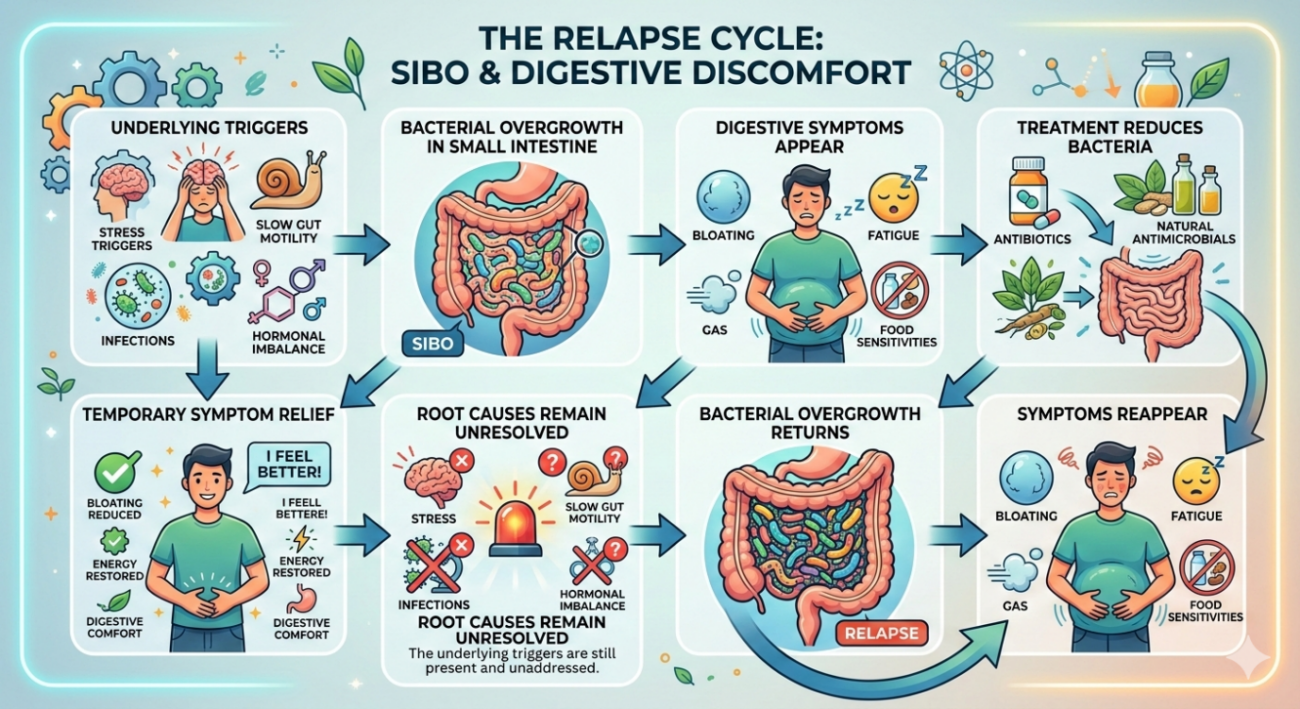
Many patients experience SIBO as a repeating cycle rather than a single event. The diagram below illustrates how bacterial overgrowth can return when underlying factors remain unresolved.
SIBO Recurrence Cycle
Key Insight
Breaking this cycle usually requires addressing more than just bacterial overgrowth. Supporting gut motility, nervous system balance, and metabolic health can help reduce the likelihood of recurrence.
This is why many patients seek guidance from a SIBO natural doctor in Seattle who can evaluate the broader factors influencing digestive health.
At Byhartz, Dr. Cara Hartz focuses on identifying these contributing patterns so treatment plans address both symptoms and the underlying causes.
PRO TIP: Think of SIBO as a Pattern, Not Just an Infection
If SIBO is treated only at the bacterial level, the cycle may repeat. Long-term improvement often involves strengthening digestive function, restoring balance in the gut environment, and supporting the systems that regulate digestion.
Gut Motility: One of the Most Important Pieces of the Puzzle
The digestive system relies on coordinated muscle contractions to move food and bacteria through the small intestine. This natural cleansing process is called the migrating motor complex (MMC).
When gut motility slows, bacteria may remain in the small intestine longer than intended, creating an environment where overgrowth can occur.
Factors that may influence gut motility include:
• Chronic stress
• Thyroid dysfunction
• Nervous system dysregulation
• Certain medications
• Previous gastrointestinal infections
Supporting healthy motility is often an important part of long-term SIBO recovery.
PRO TIP: Gut Motility Matters More Than Most People Realize
Many SIBO treatments focus only on reducing bacteria. However, without supporting gut motility, symptoms may return once treatment ends. Long-term digestive stability often requires addressing how food and bacteria move through the digestive tract.
The Nervous System-Digestive Connection
Digestion is closely connected to the nervous system.
When the body remains in a prolonged state of stress, digestion may slow or become less efficient. Stress can influence:
• Stomach acid production
• Digestive enzyme release
• Intestinal motility
• Gut barrier function
For some individuals, improving nervous system balance becomes an important part of stabilizing digestive health.
Hormonal and Metabolic Influences on Digestive Health
Hormones also play a role in digestion.
Conditions affecting thyroid function, blood sugar balance, or hormonal transitions can influence the digestive system.
Women navigating life stages such as perimenopause may notice changes in digestion or food tolerance that were not present earlier. These shifts can influence gut motility and microbial balance.
Understanding these interactions helps guide a more individualized treatment approach.
Common Root Causes of SIBO
SIBO rarely appears without an underlying reason. In many cases, bacterial overgrowth develops when digestive function becomes disrupted.
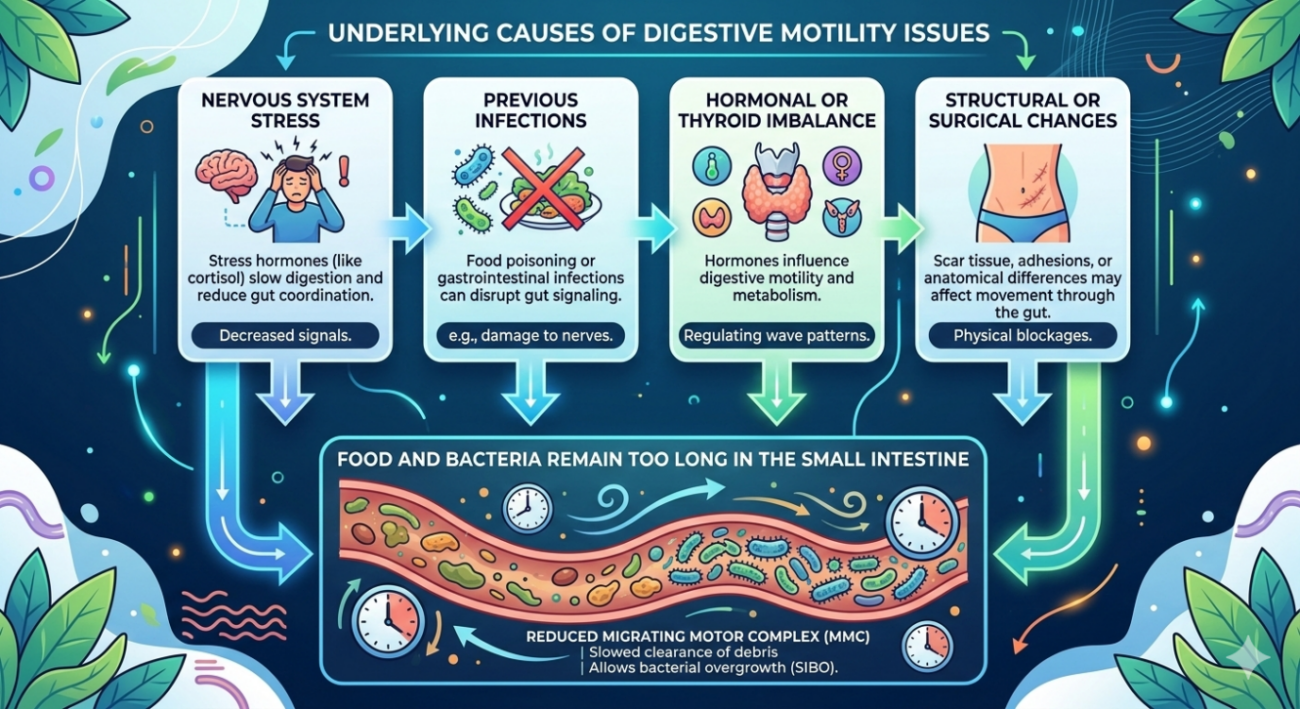
Below is a simplified visual map of factors that may contribute to SIBO.
Root Cause Map
Why Root Causes Matter
Treating bacterial overgrowth alone may provide temporary symptom relief. However, if the underlying contributors remain unaddressed, bacteria can gradually accumulate again.
A comprehensive approach to digestive health often involves understanding these deeper patterns and supporting the body’s ability to maintain balance.
PRO TIP: SIBO is Often a Multi-System Condition
Although SIBO primarily affects the digestive tract, it often involves other systems, such as the nervous, immune, and metabolic systems. Addressing these interconnected systems can help create a more stable digestive environment over time.
Important Points to Remember
• SIBO can have different gas patterns and symptoms.
• Identifying the type of SIBO may help guide treatment decisions.
• Digestive motility and nervous system balance often play key roles in recurrence.
• Personalized care can help reduce the likelihood of symptoms returning.
Why Many Patients Seek a SIBO Natural Doctor in Seattle
For individuals in Seattle who continue to experience digestive symptoms despite previous treatment, working with a provider who takes a broader view of digestive health may be helpful.
Dr. Cara Hartz at Byhartz focuses on identifying patterns that influence gut health, supporting digestive function, and guiding patients through a gradual, sustainable recovery.
Why Diet Alone Often Doesn’t Resolve SIBO
Dietary changes are commonly used to reduce symptoms such as bloating or gas. Certain diets may temporarily limit fermentable foods that bacteria feed on.
However, diet alone rarely addresses the deeper reasons for bacterial overgrowth.
Long-term digestive stability often requires attention to:
• Gut motility
• Nutrient deficiencies
• stress and nervous system balance
• inflammation and immune health
Diet can play a supportive role, but it is rarely the entire solution.
PRO TIP: Avoid Staying on Highly Restrictive Diets for Too Long
Many people with SIBO try multiple elimination diets in an attempt to control symptoms. While these diets may temporarily reduce bloating, remaining on very restrictive diets long-term can sometimes contribute to nutrient deficiencies or increased food sensitivities.
A more sustainable approach focuses on improving digestive function while gradually expanding food tolerance.
A Whole-Body Approach to SIBO Care
Because SIBO often involves multiple systems, many patients benefit from a broader perspective that looks beyond the digestive tract alone.
At Byhartz, Dr. Cara Hartz works with patients seeking a SIBO natural doctor in Seattle who takes time to understand the full picture of digestive health.
Her approach often focuses on:
• Identifying underlying contributors to bacterial overgrowth
• Supporting digestive function and motility
• Improving nutrient absorption
• Addressing nervous system balance
• Creating personalized care plans that evolve as recovery progresses
This thoughtful approach can help patients move toward long-term digestive stability.
When It May Be Time to Seek Additional Support
If digestive symptoms continue despite dietary changes or previous treatment, it may be helpful to seek further evaluation.
Persistent symptoms such as:
• Daily bloating after meals
• Unexplained fatigue
• recurring food sensitivities
• digestive symptoms returning after treatment
may indicate that underlying contributors still need to be addressed.
Working with an experienced practitioner can help identify patterns that may not be immediately obvious.
A Note of Caution About Self-Treating SIBO
Online information about SIBO has expanded quickly, but not every strategy is appropriate for every person.
Self-treating with multiple antimicrobial supplements or highly restrictive diets without supervision can sometimes lead to unintended complications, including:
• Nutrient deficiencies
• increased digestive sensitivity
• delayed diagnosis of other conditions
If symptoms persist or worsen, it is important to consult a qualified healthcare professional who can evaluate your individual health history.
Important Points to Remember About SIBO
Understanding a few key principles can help patients approach treatment more safely.
• SIBO often has underlying causes.
Reducing bacterial overgrowth is only one part of treatment.
• Symptoms vary between individuals.
Two people with SIBO may require very different care strategies.
• Diet alone rarely resolves the condition.
Digestive function, stress physiology, and motility often play important roles.
• Improvement may take time.
Digestive healing typically occurs gradually as multiple systems recover.
Find a SIBO Natural Doctor in Seattle
For individuals searching for an SIBO natural doctor in Seattle, Dr. Cara Hartz at Byhartz offers a thoughtful, patient-centered approach to digestive health.
Her care focuses on identifying the underlying patterns contributing to digestive imbalance while supporting patients through gradual, sustainable recovery.
Digestive health is complex, but with the right support, many people find that long-term stability becomes possible.
Summary
Recurring SIBO can feel discouraging, but it does not mean that improvement is out of reach.
In many cases, recurring symptoms signal those deeper factors, such as gut motility, nervous system regulation, or metabolic health, may still need attention.
Approaching digestive health from a whole-body perspective can help patients move beyond temporary symptom relief and toward lasting digestive balance.