


When most people hear about Ehlers-Danlos Syndrome (EDS), they think about flexible joints or frequent dislocations. While joint hypermobility is a hallmark feature, the reality is far more complex.
EDS is a connective tissue disorder, meaning it can affect many systems throughout the body, not just joints.
Connective tissue supports blood vessels, organs, nerves, skin, and the digestive tract. When that tissue is more fragile or elastic than normal, the effects can extend well beyond the musculoskeletal system.
For this reason, many patients eventually seek care from an Ehlers-Danlos specialist in Seattle who understands how this condition affects the body as a whole.
What is Ehlers-Danlos Syndrome?
Ehlers-Danlos Syndrome is a group of genetic connective tissue disorders that affect collagen structure and function.
Collagen is one of the body’s primary structural proteins. It provides strength and elasticity to tissues throughout the body.
When collagen is altered, several tissues may be affected, including:
- joints
- ligaments and tendons
- blood vessels
- skin
- internal organs
This is why symptoms may appear in multiple body systems.
Types of Ehlers-Danlos Syndrome
There are several forms of EDS, but the most commonly discussed include:
Hypermobile EDS (hEDS)
The most common form.
Characterized by joint hypermobility, chronic pain, and fatigue.
Classical EDS
Often involves fragile skin, abnormal scarring, and joint hypermobility.
Vascular EDS
A rare but more serious form that affects blood vessels and organs.
Each type has unique clinical features, but many patients experience overlapping symptoms.
Why EDS Affects More Than the Musculoskeletal System
Connective tissue exists throughout the body. Because collagen is involved in so many structures, EDS can influence multiple systems simultaneously.
Below are some of the most common ways EDS extends beyond joint symptoms.
The Nervous System Connection
Many people with EDS experience symptoms related to autonomic nervous system dysfunction.
The autonomic nervous system regulates functions such as heart rate, blood pressure, and circulation.
In some individuals with EDS, differences in connective tissue may influence how blood vessels respond to gravity or stress.
This can contribute to conditions such as:
- dizziness when standing
- rapid heart rate
- fatigue
- brain fog
Some patients with EDS also experience POTS (Postural Orthostatic Tachycardia Syndrome).
PRO TIP: EDS and POTS Often Occur Together
Many individuals with hypermobility also experience symptoms of autonomic dysfunction. When symptoms such as dizziness, fatigue, or changes in heart rate occur with standing, it may be helpful to evaluate the relationship between connective tissue and nervous system regulation.
Digestive Issues and EDS
The digestive system also contains connective tissue and smooth muscle. As a result, some individuals with EDS experience gastrointestinal symptoms.
Common digestive concerns may include:
- slow digestion
- bloating or abdominal discomfort
- constipation
- food sensitivities
- reflux
In some cases, altered motility or bacterial imbalances may contribute to symptoms.
Digestive support often becomes an important component of comprehensive care.
Fatigue and Energy Challenges
Chronic fatigue is frequently reported by people with EDS.
Several factors may contribute to low energy levels:
- chronic pain
- sleep disruption
- autonomic nervous system imbalance
- inflammation
- nutritional challenges
Because fatigue can have many causes, evaluating the full health picture can help identify potential contributors.
Skin and Tissue Fragility
EDS can also affect skin structure.
Some individuals may notice:
- soft or stretchy skin
- easy bruising
- delayed wound healing
- abnormal scarring
While these symptoms may appear mild, they can provide important diagnostic clues.
The Overlap with Other Conditions
EDS rarely exists in isolation. Many patients experience overlapping conditions that affect multiple body systems.
Commonly associated conditions may include:
- POTS and dysautonomia
- mast cell activation syndrome (MCAS)
- chronic fatigue
- digestive disorders
Understanding these overlaps helps explain why some individuals experience a wide range of symptoms.
How EDS Affects the Body
Ehlers-Danlos Syndrome affects the body because connective tissue is present in many organs and systems. When collagen structure differs, tissues may become more flexible, more fragile, or less supportive than usual. This can influence joints, blood vessels, digestion, and even the nervous system. The effects often appear in stages, with connective tissue differences leading to structural changes that contribute to symptoms.
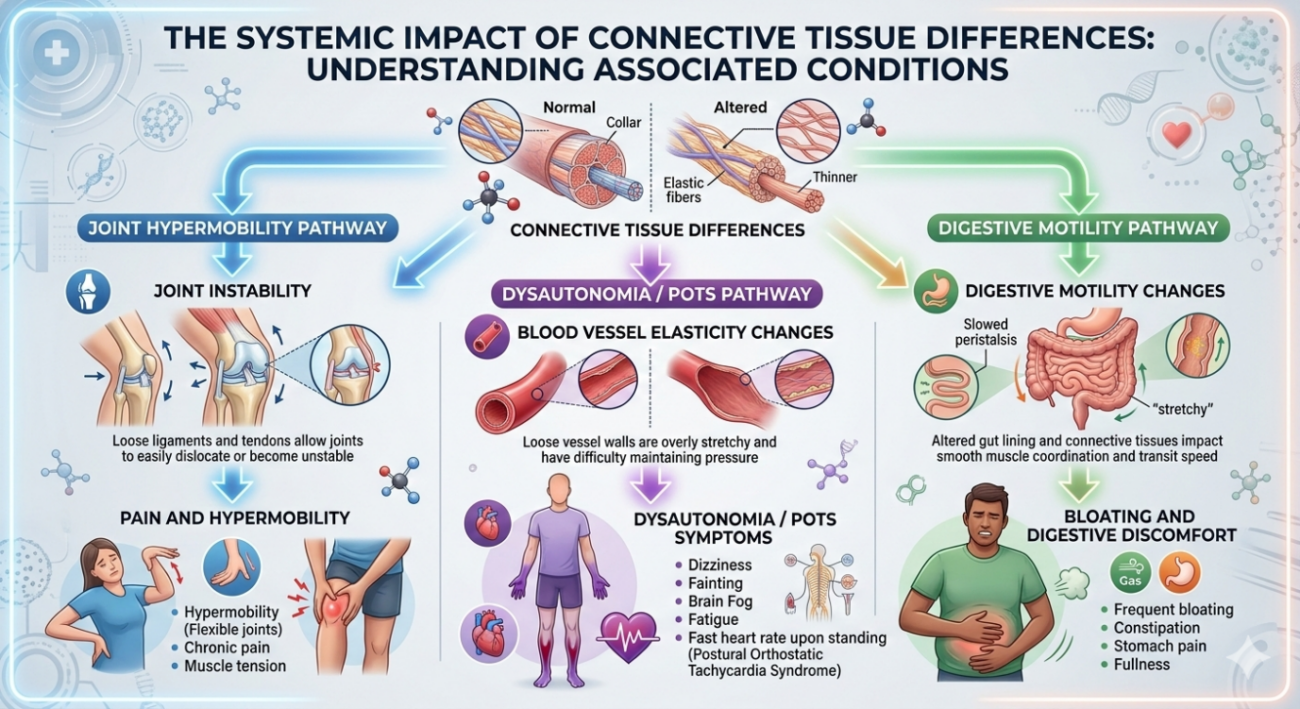
Step-by-Step Impact of EDS on the Body
Step 1: Connective Tissue Differences
EDS affects collagen, the protein responsible for strength and elasticity in tissues.
Step 2: Reduced Structural Stability
When collagen is altered, tissues such as ligaments, blood vessels, and internal organs may become more elastic or fragile.
Step 3: Joint Instability and Musculoskeletal Strain
Loose ligaments can allow joints to move beyond their normal range, increasing the risk of pain, instability, or dislocation.
Step 4: Circulation and Nervous System Changes
More elastic blood vessels may affect circulation and blood pressure regulation, contributing to symptoms such as dizziness, fatigue, or a rapid heart rate when standing.
Step 5: Digestive System Effects
Connective tissue also supports the digestive tract. Changes in tissue strength may influence gut motility, leading to bloating, slow digestion, or food sensitivities.
Step 6: Whole-Body Symptom Patterns
Because connective tissue exists throughout the body, individuals with EDS may experience a combination of musculoskeletal, digestive, neurological, and energy-related symptoms.
Why Many Patients Go Undiagnosed for Years
EDS symptoms can vary significantly between individuals.
Some people have primarily joint symptoms, while others experience fatigue, digestive issues, or nervous system symptoms.
Because these symptoms may appear unrelated, patients sometimes spend years searching for answers before receiving a comprehensive evaluation.
Greater awareness of connective tissue disorders has helped more individuals understand the broader picture of their health.
A Whole-Body Perspective on EDS Care
Because EDS affects multiple systems, care often focuses on supporting overall function and resilience.
At Byhartz, Dr. Cara Hartz works with patients seeking an Ehlers-Danlos specialist in Seattle who takes a thoughtful, whole-body approach.
Care may involve evaluating:
- nervous system balance
- inflammation and immune function
- digestive health
- nutrient status
- lifestyle factors affecting recovery
Treatment plans are personalized and adjusted based on each patient’s symptoms and goals.
PRO TIP: Individualized Care Matters in EDS
Because EDS presents differently in each person, treatment strategies should be tailored to the individual rather than relying on a one-size-fits-all protocol.
Important Points to Remember About EDS
• Ehlers-Danlos Syndrome is a connective tissue condition affecting multiple body systems.
• Joint hypermobility is only one part of the condition.
• Nervous system, digestive, and immune symptoms may also occur.
• Individualized care can help address overlapping symptoms and improve quality of life.
When to Consider Seeing an Ehlers-Danlos Specialist in Seattle
You may benefit from further evaluation if you experience:
- joint hypermobility with chronic pain
- frequent joint instability or injuries
- unexplained fatigue
- dizziness or rapid heart rate when standing
- digestive symptoms alongside hypermobility
Working with a knowledgeable practitioner can help connect the dots between symptoms that may seem unrelated.
Conclusion
Ehlers-Danlos Syndrome is more than a joint condition. Because connective tissue supports structures throughout the body, the effects of EDS can extend to many systems, including the nervous system, digestive tract, and skin.
Understanding this broader picture can help patients move toward more effective and personalized care.
For individuals seeking an Ehlers-Danlos specialist in Seattle, exploring a comprehensive approach may help clarify symptoms and support long-term well-being.