
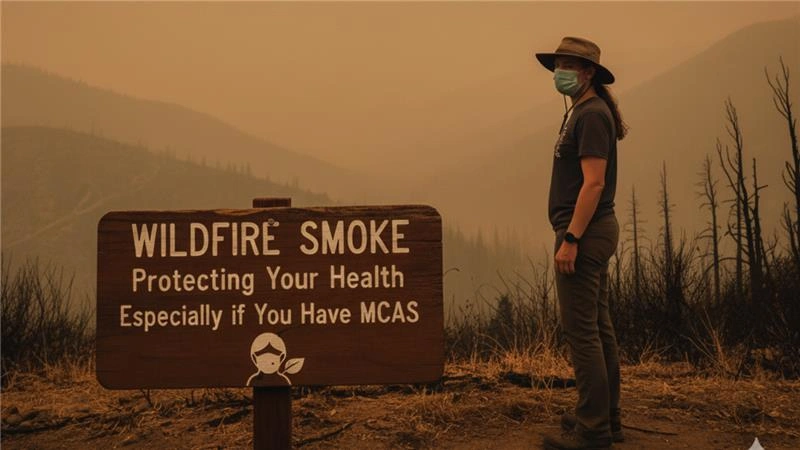
Seattle is waking up to its first day of wildfire smoke this season. The skyline looks hazy, the air smells faintly burnt, and for many, the symptoms have already begun: coughing, watery eyes, fatigue, and a heavy feeling in the chest.
But for those with Mast Cell Activation Syndrome (MCAS), this is more than just an uncomfortable day. Wildfire smoke can be a powerful flare trigger, one that impacts breathing, brain function, skin, digestion, and overall well-being.
If you or a loved one have MCAS, this is the time to take precautions and have a trusted MCAS specialist in Seattle on your side.
Why Wildfire Smoke is a High-Risk Trigger for MCAS
If wildfire smoke makes you feel like your body is in crisis mode, you’re not imagining it – your mast cells are reacting.
Wildfire smoke is a complex, dangerous cocktail of:
- PM2.5 fine particles – small enough to pass deep into your lungs and even your bloodstream.
- Toxic gases – including carbon monoxide, nitrogen oxides, and volatile organic compounds (VOCs).
- Chemical residues – from burning vegetation, plastics, treated wood, and building materials.
For someone with MCAS, these pollutants can over-activate mast cells, the immune system’s “alarm” cells. This leads to an outpouring of inflammatory chemicals such as histamine, prostaglandins, and cytokines – triggering symptoms that can feel overwhelming.
Common MCAS Flare Symptoms During Wildfire Smoke Events
- Shortness of breath, wheezing, or chest tightness
- Unusual fatigue or “crash” feelings
- Brain fog, poor concentration, or confusion
- Rashes, flushing, or hives
- Digestive upset
- Rapid heartbeat or palpitations
- Increased anxiety or restlessness
For some patients, a flare can last for days – even after the smoke clears – unless addressed properly.
How Dr. Clara Hartz Helps MCAS Patients Weather Wildfire Smoke Season
You can’t control the air outside – but you can control how your body responds to it.
As a mast cell activation syndrome doctor in Seattle, Dr. Cara Hartz has spent over a decade helping patients identify, manage, and reduce environmental triggers – including wildfire smoke.
Her care at ByHartz blends the precision of primary care medicine with the whole-body perspective of naturopathic and environmental medicine. This means she not only addresses your current symptoms but also builds resilience against future flares.
Her wildfire smoke-related MCAS care may include:
- Trigger mapping: Identifying and ranking your personal environmental sensitivities.
- Flare response plans: Step-by-step strategies for when symptoms begin.
- Respiratory support: Herbal, nutritional, and therapeutic tools to protect your lungs.
- Immune and mast cell stabilization: Targeted interventions to reduce overreaction.
- Detox pathways optimization: Helping your body clear out inhaled toxins.
- Long-term prevention: Seasonal preparation to reduce flare frequency and severity.
Meet Dr. Cara Hartz – Seattle’s Trusted MCAS & Environmental Medicine Specialist
Dr. Cara Hartz is a naturopathic primary care doctor in Seattle, WA, founder of the ByHartz approach, and a deeply committed advocate for patient-centered, root-cause medicine.
Her journey began with a childhood dream of becoming a physician, her love for plants, and her own personal health challenges – leading her to discover the life-changing potential of naturopathic medicine.
Education & Training:
- Doctorate from Bastyr University (2010)
- Residency in Pediatrics and Women’s Health
- Advanced residency in Primary Care with a focus on Lyme disease and vector-borne infections
- Specialized training in Environmental Medicine and chronic illness care
Philosophy & Approach:
- Treats all family members with care plans tailored to individual needs
- Integrates lifestyle, mental health, and environmental factors into every treatment
- Deeply listens to patient stories to uncover hidden health obstacles
- Lives by the same naturopathic principles she teaches
Outside the clinic, Dr. Hartz is a mother of three, soccer coach, organic gardener, herbal medicine maker, recipe creator, hiker, camper, paddleboarder, and active community member. Her personal connection to humans and nature fuels her mission to help patients stay well in all seasons – even during Seattle’s wildfire smoke days.
When to Seek Medical Help During Wildfire Smoke Events
You should contact a medical professional immediately if you experience:
- Difficulty breathing or shortness of breath at rest
- Chest pain, palpitations, or dizziness
- Severe fatigue or confusion
- Asthma attacks not relieved by your usual medication
- Signs of a severe allergic reaction
Why Choose ByHartz Clinic for MCAS and Wildfire Smoke Care in Seattle
If you’re searching for:
- MCAS doctor for wildfire smoke in Seattle
- Wildfire smoke MCAS specialist near Seattle
- Mast cell activation syndrome doctor Seattle
- MCAS flare doctor Seattle
- Wildfire smoke treatment Seattle
- Best MCAS doctor near Seattle for wildfire smoke triggers
… you’ve found the right place.
Dr. Cara Hartz and the ByHartz team are ready to help you breathe easier, recover faster, and prevent future flares by naturopathic knowledge, clinical experience, cutting edge research, the use of supplements, along with dietary and lifestyle modification.